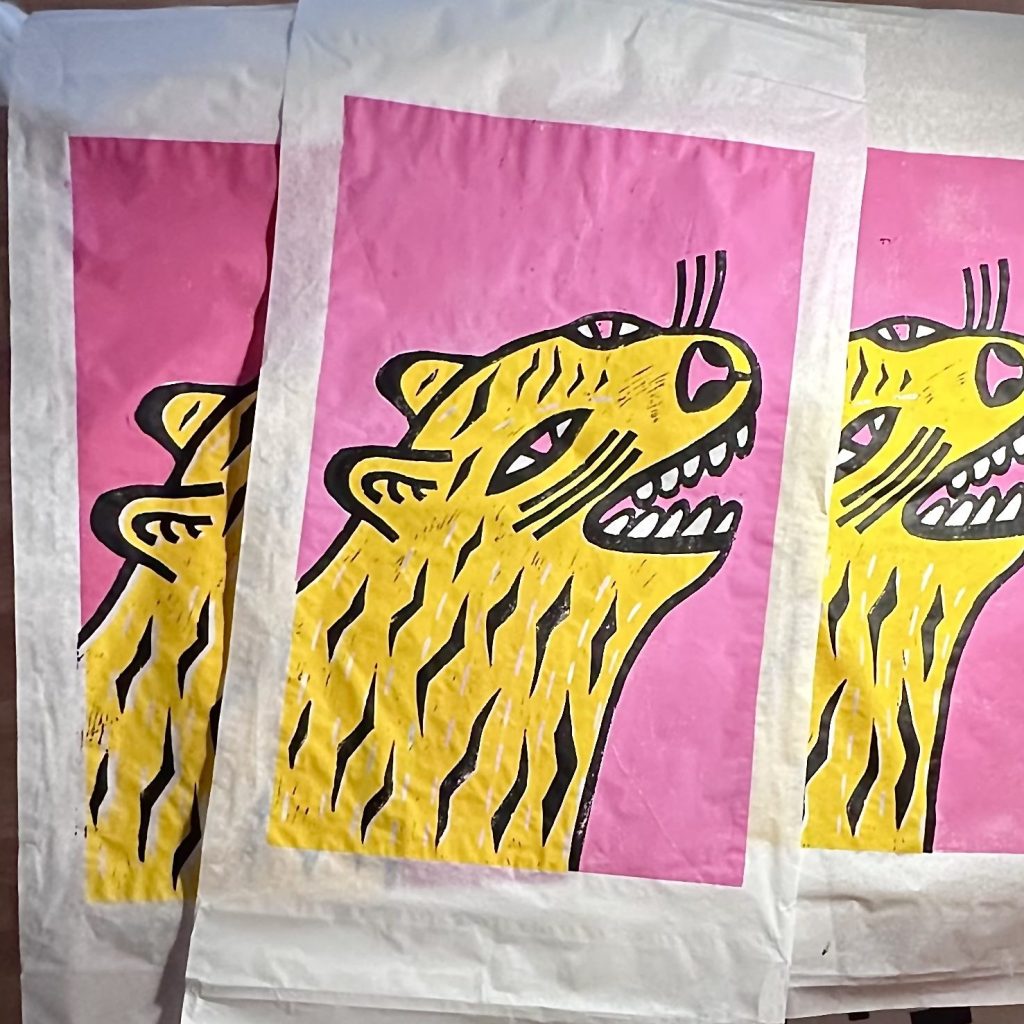
Rodrigo Botero developed his linocut technique through a subversion of traditional printing techniques in lino and wood. This subversion, however, is not understood as shock, rejection, or opposition. It is an embracing form of subversion, in which different traditions of printmaking do not compete with one another but are allowed to coexist, complement, and transform each other.
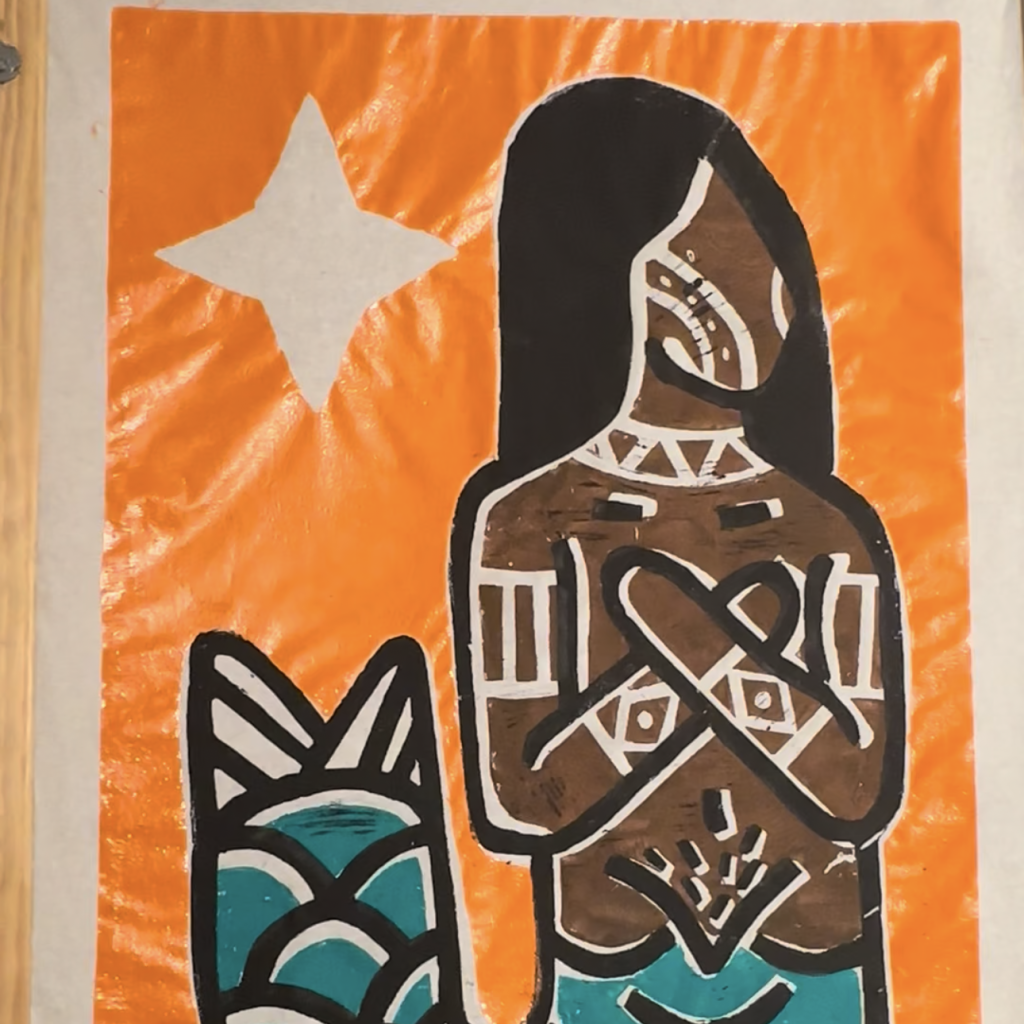
From Brazilian cordel printing comes the strength, density, and texture of the image. From Japanese ukiyo-e comes the principle of printing in layers, building the image through successive impressions. From Chinese calligraphy comes the delicacy and softness of the paper, which creates a counterpoint to the force and hardness traditionally associated with press printing and heavier papers.
Another element comes from childhood memories of the streets of Brazil: the technique of stretching delicate kite paper using moisture and heat. A simple, practical knowledge acquired outside the formal traditions of printmaking becomes part of the process, allowing the fragility of the paper itself to participate in the construction of the image.
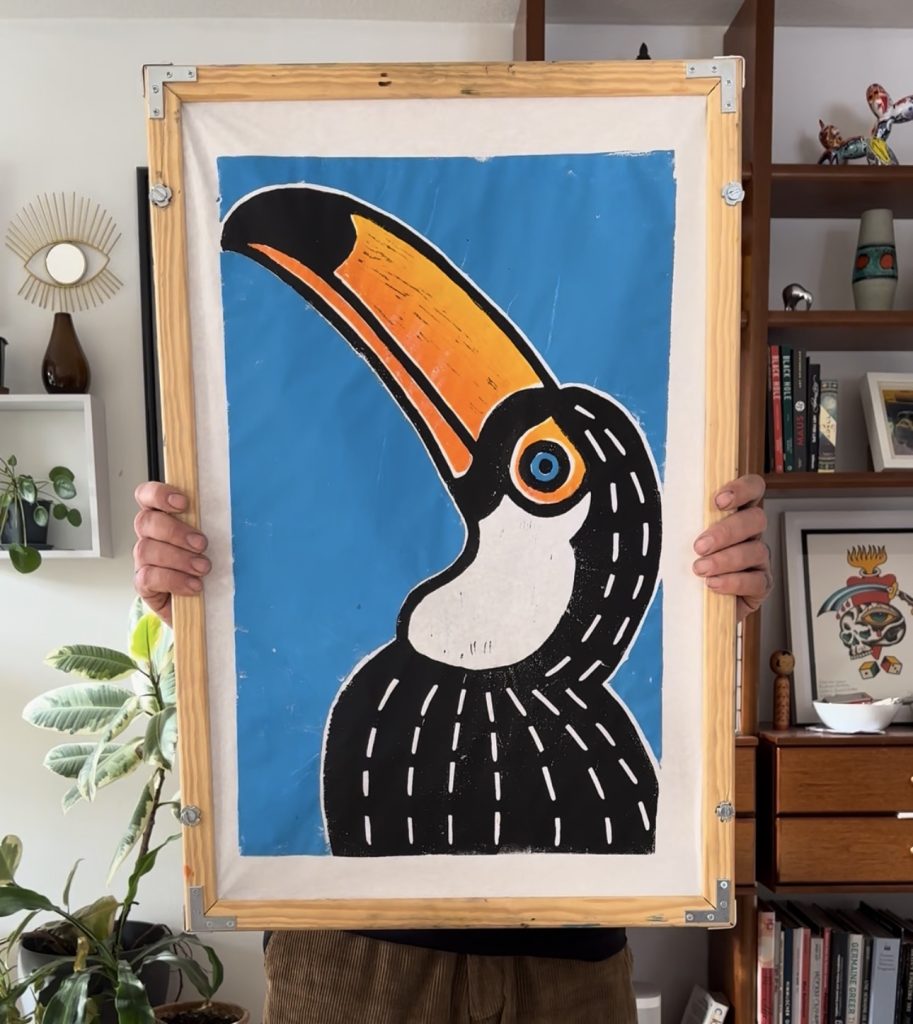
The resulting technique emerges from the combination of these seemingly distant references and from the practical challenges that printing has historically carried with it: limited materials, local resources, experimentation, adaptation, and the constant search for ways to reproduce and disseminate information.
The process is therefore not an attempt to reproduce a single historical printing tradition, but to create a dialogue between them. Traditional techniques are treated as living knowledge—something to be studied, respected, altered, and recombined. The result is a personal printing practice in which technical experimentation becomes inseparable from cultural memory, accessibility, and the desire to make images and information circulate more widely.