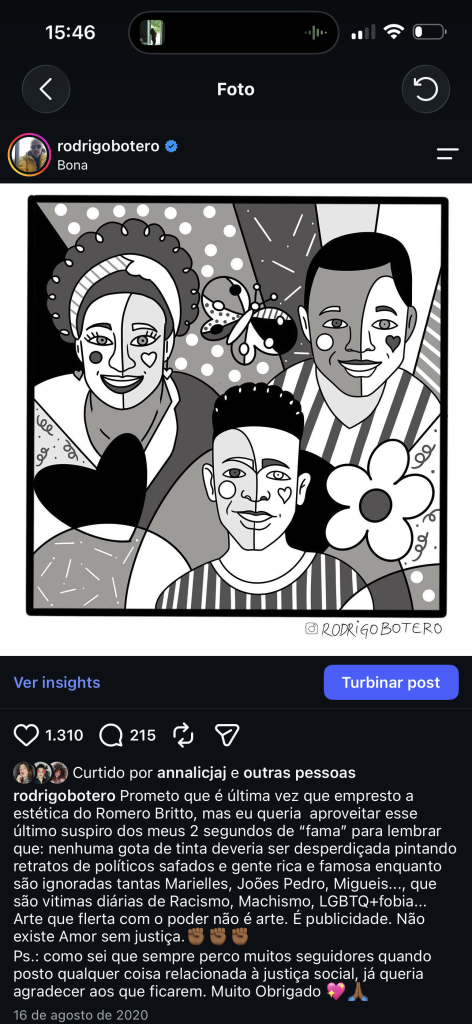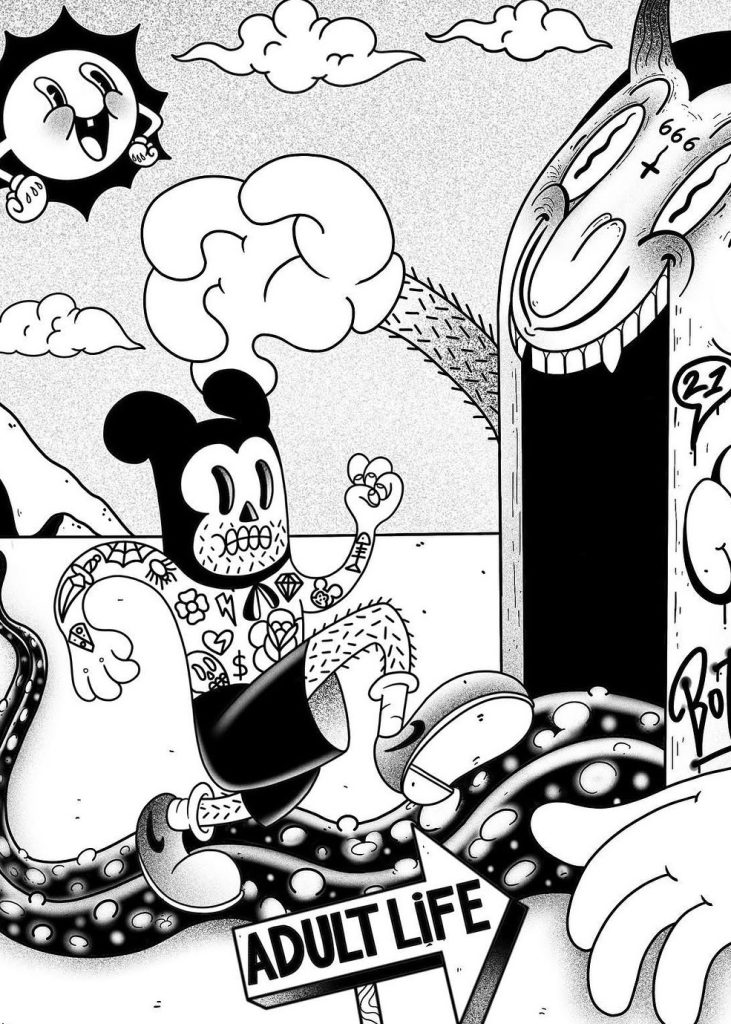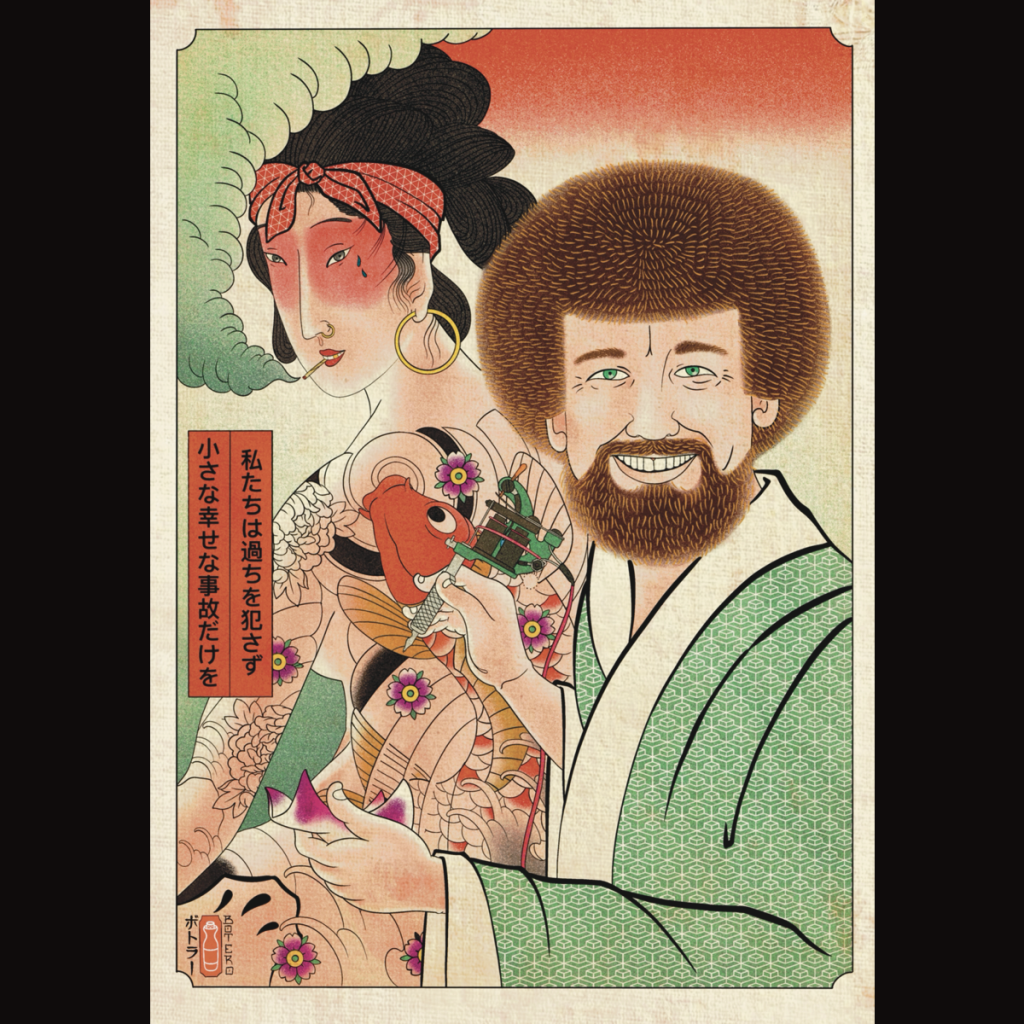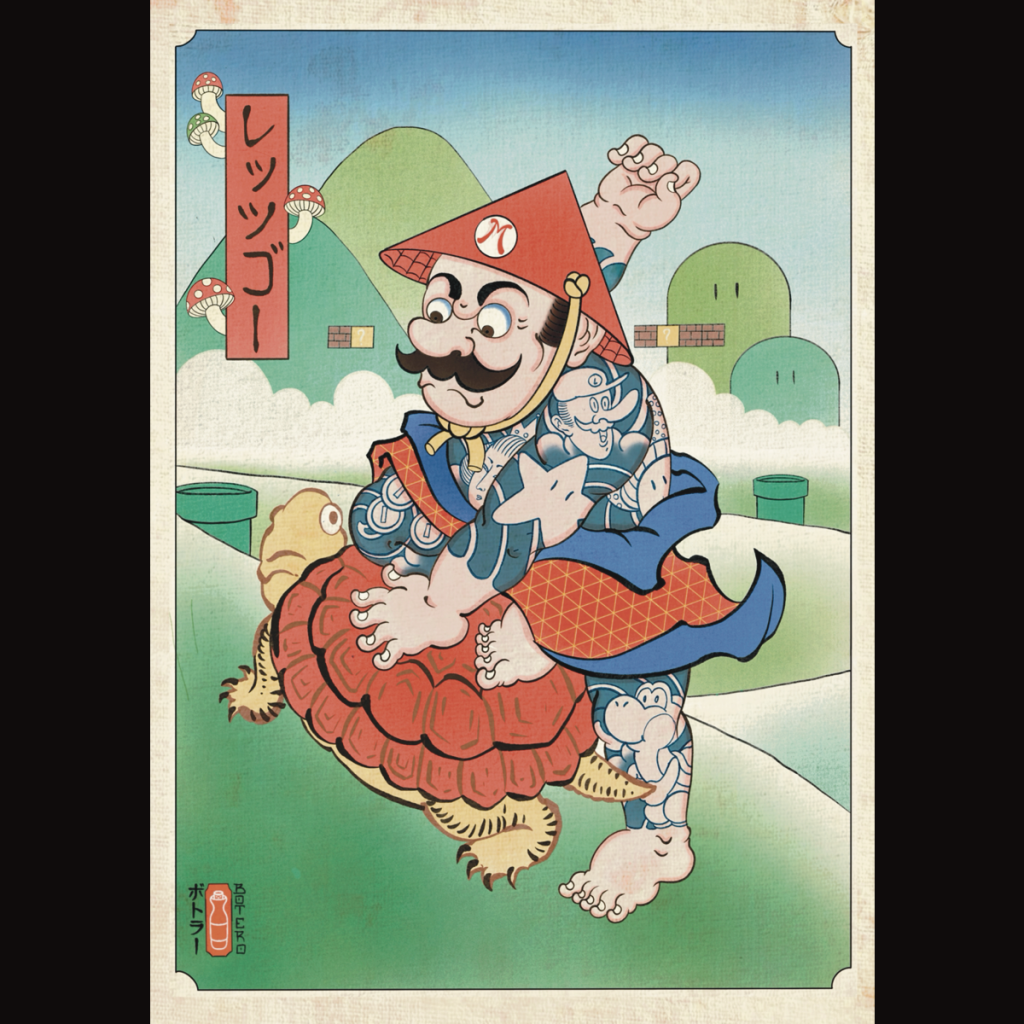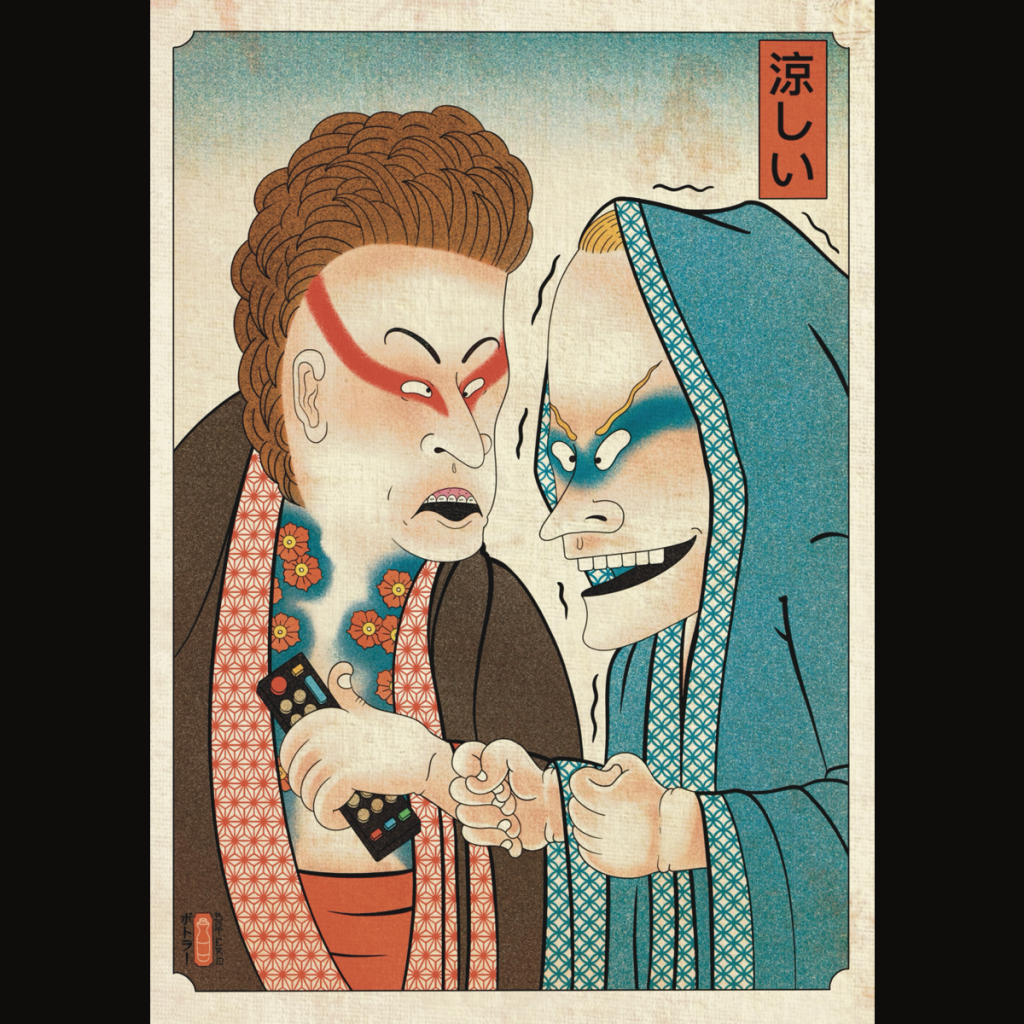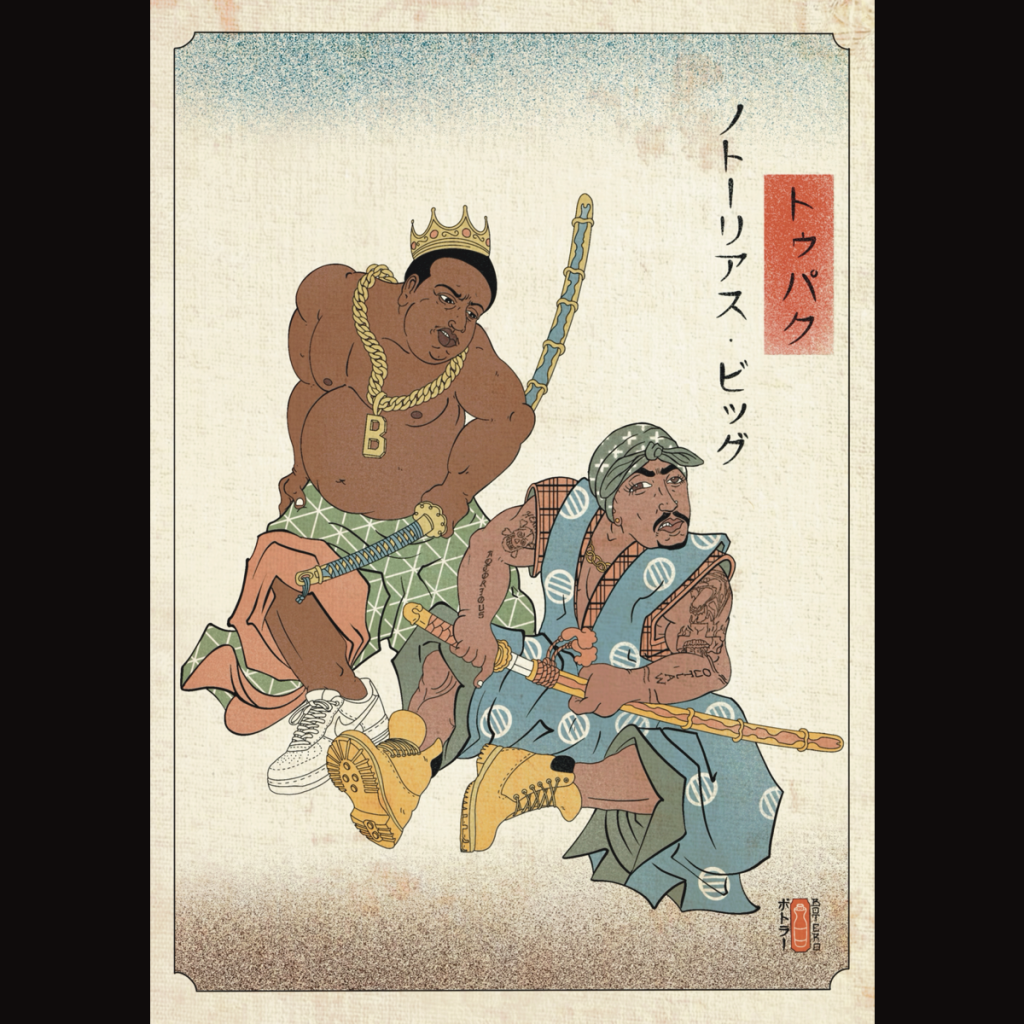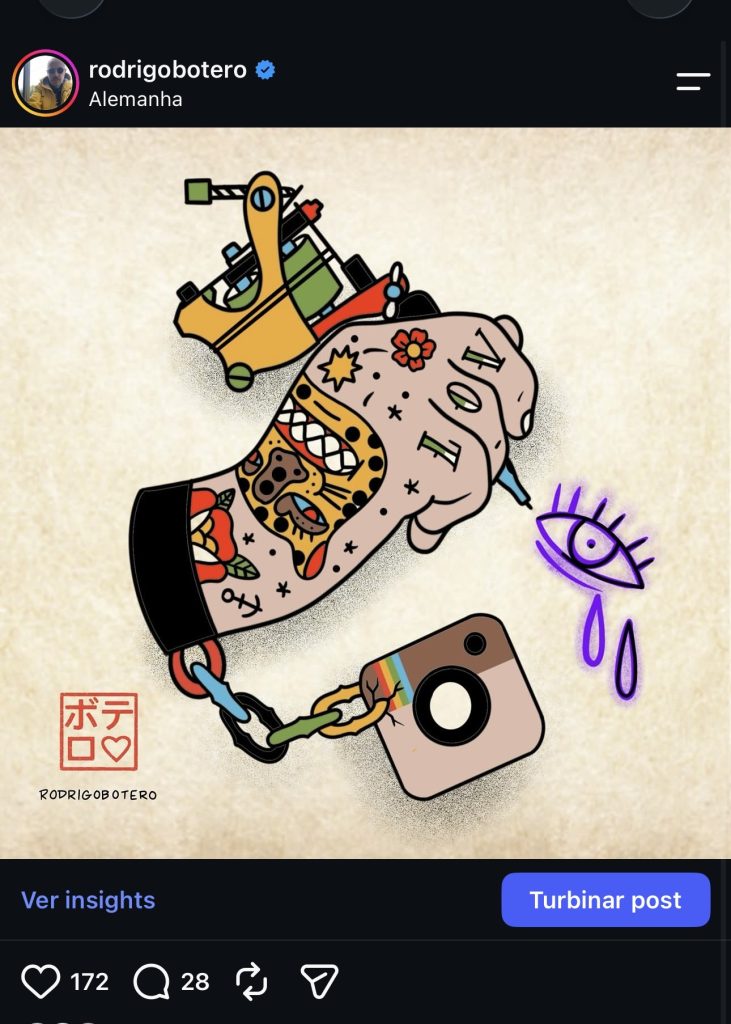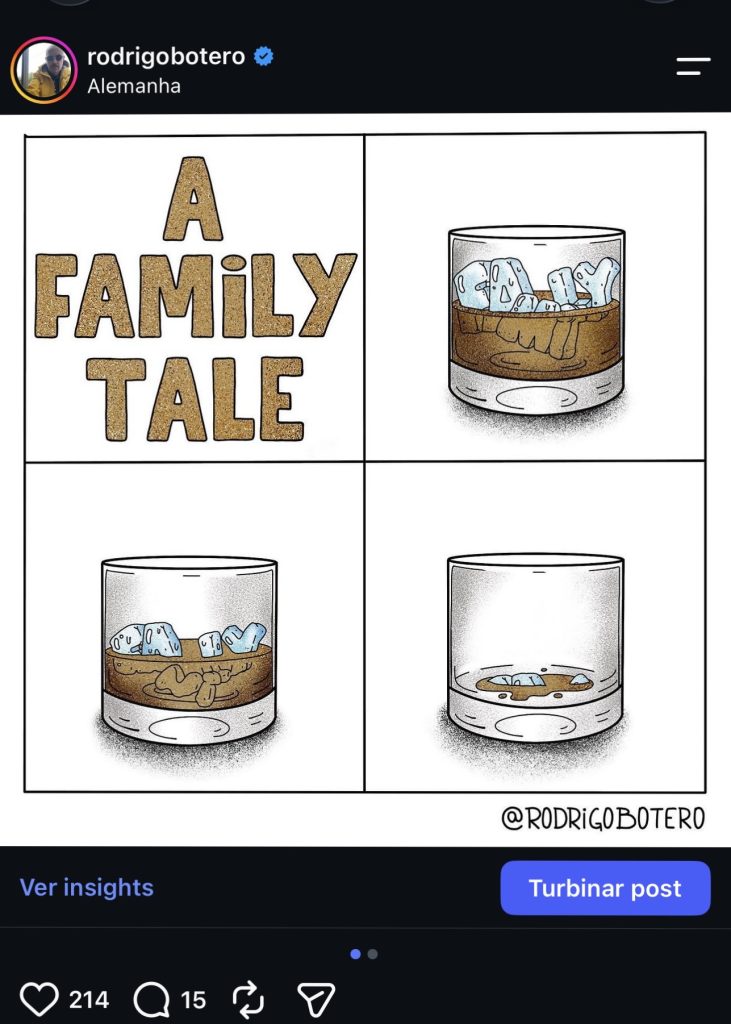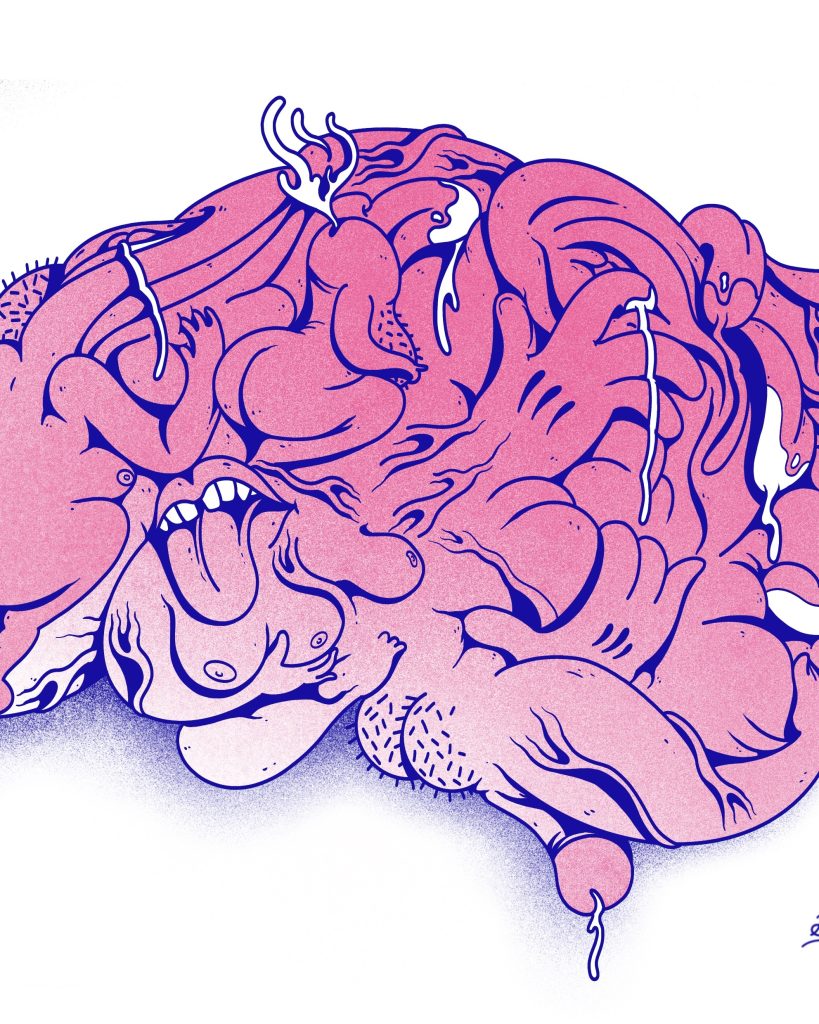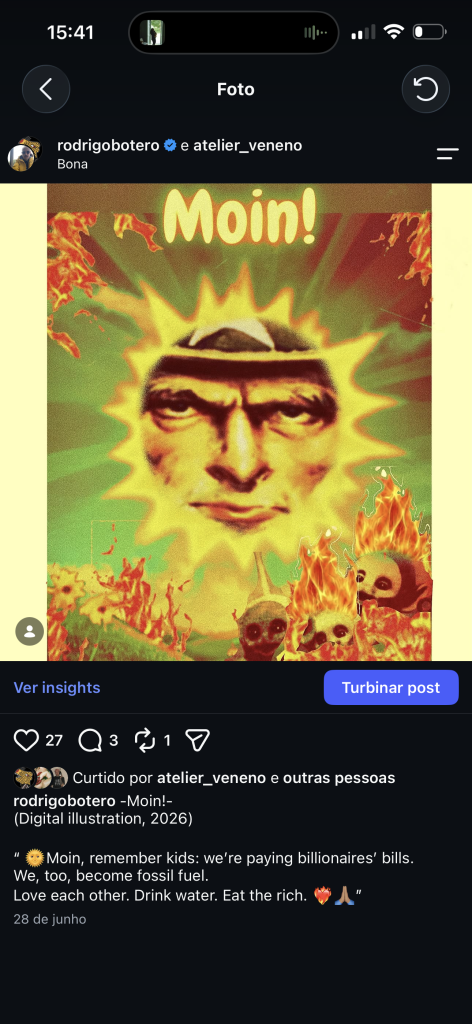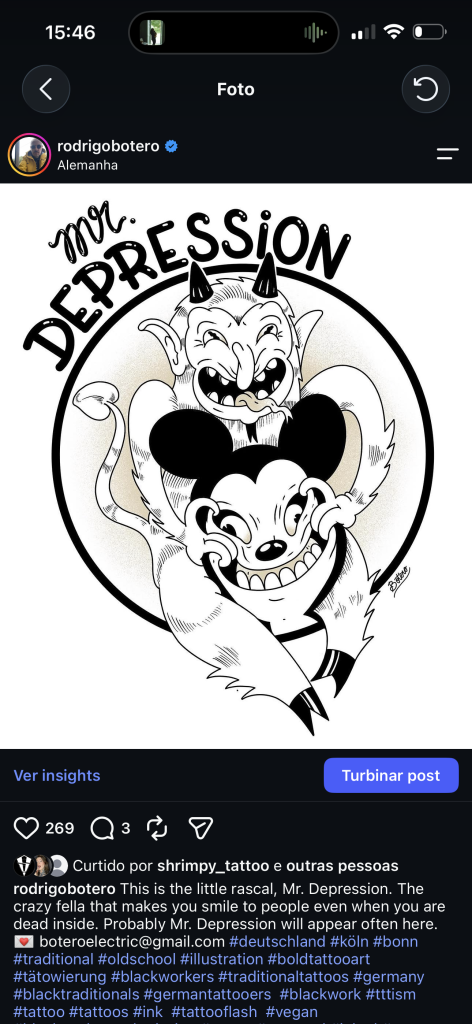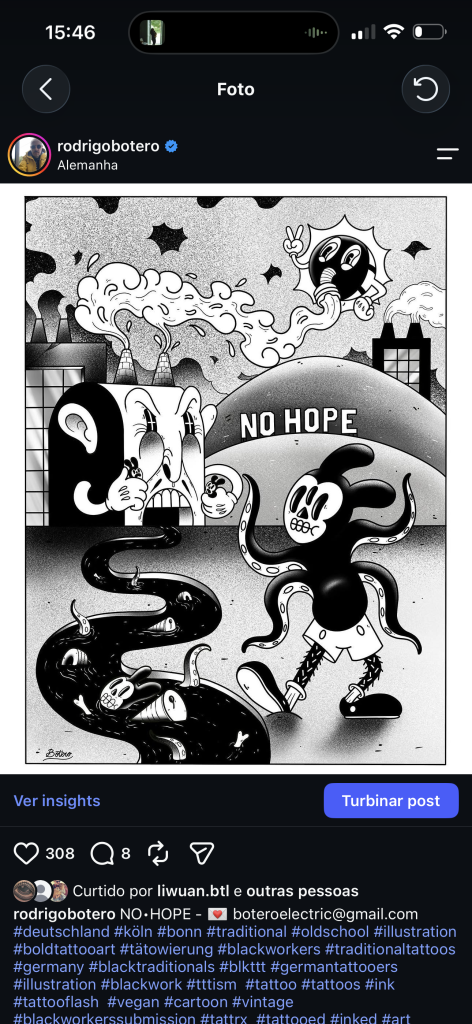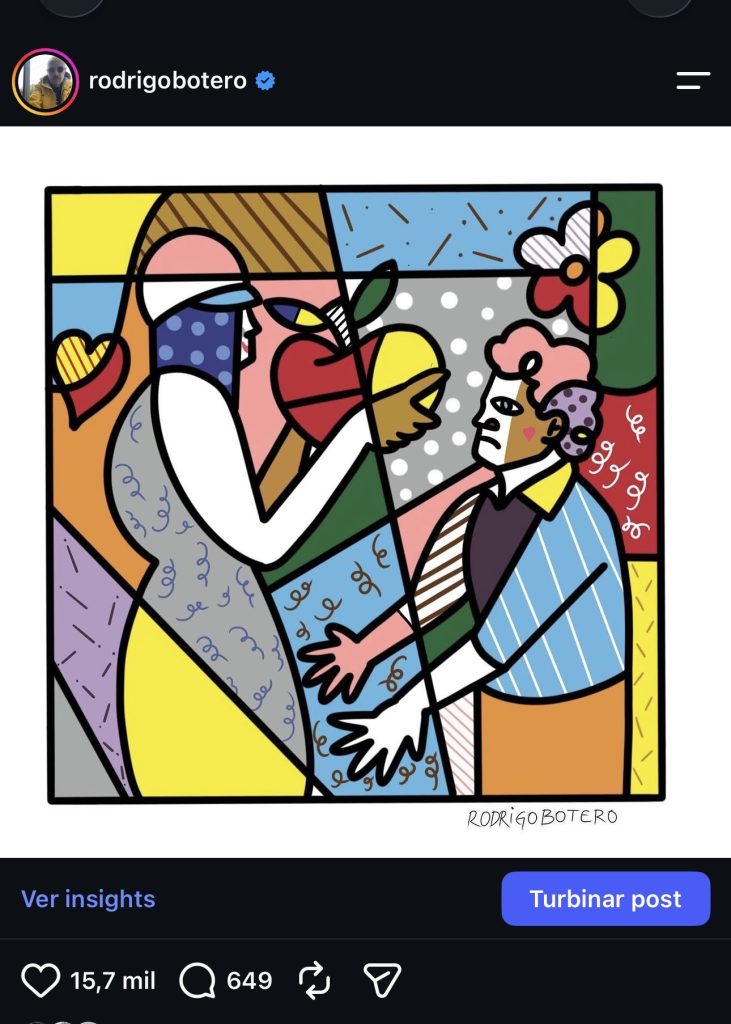
Digital illustration is a case apart. It is conceived to exist in dialogue with a digital world, where speed, language, circulation, and the particular moment in which an image is produced all influence the creative process.
At the same time, digital illustration establishes another kind of dialogue: between the immaterial nature of the digital image and the physical reality of the person looking at it. The image may consist of nothing more than an arrangement of pixels, but those pixels do not remain empty or sterile. They acquire meaning, presence, and even physicality through perception.
In this sense, the act of looking becomes part of the construction of the image. Like an experiment in which observation changes the way a phenomenon is understood, the digital image is not entirely defined until it encounters an observer. What exists as data on a screen becomes an image through perception, interpretation, memory, and context.
For Rodrigo Botero, digital illustration is therefore not simply a translation of traditional drawing into a digital medium. It is an investigation into how images behave within contemporary digital culture—how they are produced, perceived, circulated, and transformed by the people and environments that encounter them.